Friday, August 10, 2012

Hey NAQC, your hypocrisy is showing!

Imagine this - the Consumer Advocates for Smoke-free Alternatives holds a tobacco harm reduction conference, which turns out to be largely sponsored by Lorillard, R.J Reynolds and Ariva. Since CASAA already promotes the use of smoke-free alternative products such as those made by these companies (e-cigarettes, strips, sticks, snus and lozenges), no big deal, right? How do you think the anti-tobacco groups would react to finding this out? Do you think we would see numerous press releases about CASAA containing phrases like "paid shills" and "conflict of interest?"

"Talk to the hand." says NAQC
Now take a look at the original commentary and the follow up commentary by Dr. Michael Siegel, regarding the sponsorship of the North American Quitline Consortium's (NAQC) upcoming conference by three makers of nicotine addiction/cessation products: Pfizer, GlaxoSmithKline and Novartis. Dr. Siegel points out that the NAQC conference will "include discussion of strategies for ensuring the effectiveness of quitlines. This encompasses important issues, such as the use of nicotine replacement therapy and other smoking cessation drugs in quitline advice."

Yet, NAQC's president and CEO, Linda Bailey, practically bristles at the idea that there is any conflict of interest with "partnering" with these companies and responds that NAQC is "proud to have them on-board" and looks forward "to working with these partners in the pharmaceutical industry to advance NAQC’s mission." The conference organizers take great pains in utilizing the phrase "evidence-based quitline services," but one would naturally  question who is providing the "evidence" on the effectiveness of NRT and other nicotine addiction treatments? Of course, insisting on "evidence-based" products also allows them an excuse for ignoring other products that may be better for the smoker who cannot or will not quit tobacco products.

Ms. Bailey states, "FDA-approved cessation medications are well-accepted evidence-based treatments for cessation. They are included as part of the U.S. Public Health Service’s Guideline on Tobacco Cessation Treatment. Currently, 75 percent of all U.S. quitlines provide medications along with counseling services. We hope to report 100 percent of quitlines are providing cessation medications to smokers in the near future. Providing medications as part of a quitline’s treatment protocol increases the likelihood that smokers will successfully quit." So, essentially, the goal is to get all smokers buying or receiving taxpayer-funded NRT products and pharmaceutical companies would have no interest in financially supporting this goal?

Remember that the FDA approves NRT and other nicotine addiction treatments based on submitted research and testing paid for by the company seeking drug approval and "effectiveness" is basically based upon outperforming a placebo by the smallest of margins. The drug companies pay the FDA to be tested and are usually approved. (A former FDA boss, who went on to work for a drug company, was  quoted by whistle blower Dr. David Graham as stating that the drug industry is the FDA's client, not the American consumer.) It seems obvious that only after being released to the public and after numerous reports of adverse health effects does the FDA pull a drug from the market and seriously review it. (Don't forget - industry-funded testing of tobacco products which don't support the ANTZ prohibitionist agenda, including e-cigarettes, is always "suspect" and always dismissed as "biased.") Also, while participants in smoking cessation trials are typically highly motivated to quit, the vast majority still relapse back to smoking. These are the "evidenced-based treatments" NAQC promotes and defends.

While CASAA and other tobacco harm reduction advocates can show similar (and much more concrete) scientific, "evidence-based" reasons for recommending smoke-free tobacco products for harm reduction, they know that the second they take money from any tobacco company, the accusations of "paid shills" and "conflict of interest" will start flying from groups such as NAQC. (Indeed, they get such accusations even without tobacco industry funding.) Yet, NAQC's receipt of money from pharmaceutical companies is somehow different, because (apparently) the pharmaceutical industry is nothing like "Big Tobacco." The pharmaceutical industry would never put a drug on the market that harms consumers.It would never exaggerate the effectiveness of its drugs (NRT treatments fail 97% of the time.)  It would never lie about that drug or deny the danger to protect its profits. The FDA would never allow a dangerous product (Chantix) on the market that needs to have "black box" warnings added after the fact, right? So, anything the pharmaceutical industry says and sells can be trusted, because it only has our best interests at heart rather than making a buck - or billions of bucks, to be more accurate.

It astounds me that they cannot see their own hypocrisy. Then again, maybe they can, but it simply better fits their ANTZ agenda to pretend it doesn't exist. Unfortunately, the rest of the public seems happy to oblige the delusion.

Wednesday, July 25, 2012

Smokers are not a lost cause


Have you ever noticed that the advice given by ANTZ and health groups is "for smokers who want to quit, use FDA-approved products?" The key words are "want to quit." They don't even bother anymore for the "lost causes" who have no intention of quitting. They always claim that 3/4 of smokers "want to quit," but they never bother to find out if those who express the desire to "quit" would really rather not, but just do not want to die. That may be a huge reason for why so many smokers who "want to quit" never even make the attempt or fail if they try.

Think of it in terms of VD or AIDS. Most people don't want to get those diseases, but they don't really want to give up sex, either. If health groups had convinced the world that the only way to avoid those diseases and the certainty of dying was complete abstinence (rather than the policy they actually took - harm reduction,) how many people would say they "want" to remain abstinent, simply meaning they want to live? How many people would succumb to social pressure of giving up something they enjoy rather than being made a pariah for their reckless and dangerous behavior of continuing to have sex?

Smokers have been socially pressured into giving up something many, if not most, enjoy and made to feel shame for admitting they enjoy it and would rather not quit. But they don't want to die, either. Yet instead of promoting harm reduction for those people, the health groups have lied to them and said their only choice is tobacco/nicotine abstinence or death. Consequently, the public believes tobacco/nicotine users are reckless and fools to even consider using any kind of tobacco or nicotine, regardless of the true risks.

It'd be like telling people using condoms (instead of abstinence) that condoms aren't a guarantee against disease and using them could lead to reckless behavior like NOT using one or that it could break, so they need to give up sex or die. Condoms are not a safe alternative! They would have basically told people who still want to have sex that it doesn't matter if they use a condom or not. The public and health groups today would see that as something ridiculous and unethical to say, yet it is exactly what they are telling people who want/need to use tobacco/nicotine.

There are millions of smoke-free tobacco users and e-cig users who still feel pressure and guilt to give up something that is low risk and that they enjoy because of the "quit or die trying" mantra of the ANTZ. You are not a bad person because you enjoy or need nicotine or the activity of "smoking." The people would have you believe that your "addiction" is somehow a testament to your "lower moral character" are hypocrites who most certainly have their own, socially accepted "crutch." Don't let them get to you.

Friday, April 27, 2012

Why do vapers still believe Big Tobacco is 'evil?'

With the recent announcement from Blu Electronic Cigarettes that it has been sold to Lorillard Tobacco company, panic seems to be spreading through the e-cigarette community. Many vapers seem to harbor a hatred for "Big Tobacco" and have expressed disgust, outrage, distrust and fear that the industry will now turn e-cigarettes into what they were trying to escape. Here are some personal thoughts about the situation that I posted on a community forum, in response to comments that Big Tobacco was not to be trusted with e-cigarettes:

Are any of u planning on buying any pv hardware or liquids from a company that has previously tried to knowingly kill us?????

How on earth could we ever trust that they would sell us the best that is available?

Do you still buy products from the automobile industry? Did you know the automobile industry knew that seat belts and air bags would save lives, yet fought having them be mandatory in cars? Or they knew for 30 years about the problem of spontaneous acceleration, yet covered it up and continues to deny it?

Do you still buy medications - both prescription and over the counter? Yet everyone has heard of the myriad of denials and cover ups made over the years by Big Pharma - Chantix, Avandia, Paxil - were all killing people and BP lied, denied and hide the facts. Still, people do not claim BP knowingly tried to kill people.

The denials and cover up of "Big Tobacco" were no different or worse than any of those perpetrated by other industries, yet they are still vilified while other companies get a free pass time and again. The fact is, while smoking is highly dangerous, it doesn't kill every user or even most users; there are more people today who have quit smoking than smoke and anyone who has ever smoked cannot pretend that they didn't feel the negative effects of smoking on their body and believed it was still good for them or perfectly safe. Those tobacco executives who participated in that cover up and denial are long gone. It's a well-known fact that smoking can be bad for you and has been since the 1950's, but so are a lot of other things that are sold to people today. It's fully informed, personal choice now whether or not to take the risk and has been for some time. It was well known in the 1980's when I made the choice to start smoking - whether the tobacco companies admitted it was addictive or not. The tobacco companies weren't knowingly "trying to kill" me, because I shouldn't have started smoking in the first place.

Now the question becomes, will they be "smart" with their purchase and marketing plan... If so, and if they do not re-introduce all of the "nasty" things that are in the good old analogs, they could have something here. 


I would not mind purchasing supplies from them as long as I know they are not trying to kill me like the normal smokes will. I also would be concerned about pricing and the fact that it might go up. I guess it depends on how much the government wants to step in on this and how much "pocket padding" BT is willing to pay to make this work.

Because of the general mistrust of tobacco companies, Lorillard has to know it will be under extreme scrutiny - something other e-cigarette companies haven't had to deal with...yet. If anything, Lorillard will be motivated to produce the cleanest, safest e-liquid possible because of that scrutiny - and they'll probably promote that fact. (From my understanding, the deal with Johnson Creek is not going to end anytime soon anyhow.) Additionally, unlike with tobacco - which has thousands of NATURAL ingredients within which to hide the toxic additives people believe are added to cigarettes - it would be very difficult to add toxic chemicals to something that basically has only 3 or 4 "generally regarded as safe" ingredients without being discovered.

As far as prices, Lorillard has the ability to make much larger purchases and negotiate prices with manufacturers - which will help them compete and keep prices low. I'm sure they are well aware that the high costs of regular cigarettes, a lot due to taxation, is partly why people quit smoking or switch to e-cigarettes and keeping the cost low is a strong selling point. It also gives them incentive to fight unjustified sin taxes on e-cigarettes - something that will benefit the industry as a whole.

The whole point of e-cigarettes for most people are low health risks and low price. It would be counter-productive for Lorillard to buy into the industry and remove those two greater incentives. It would be like large food company buying a popular and successful organic health food company and changing all of the ingredients to be non-organic and full of preservatives, fat and sugar. Why would anyone buy their product then?? It just wouldn't make sense.


There is the risk that Lorillard will try to negotiate with the FDA (like Philip Morris did with the FSPTCA), resulting in regulations that could essentially wipe out anything other than a blu-style device, pre-filled cartos and tobacco flavors and acquiesce sin taxes and public use bans. I can guess that CASAA would NOT support that! I hope they truly understand how vapers are a different breed - we won't go quietly into the night like we did as smokers. Lorillard needs to understand that they have a really great market with the starter vapers and don't need to destroy the cottage companies that specialize in the upgrade devices and boutique liquids. They will see a lot of consumer backlash if they attempt to move against those types of products and I will be out front leading the charge if I have to!

I don't know, this really bothers me. We all know BT has spent countless hours of research and ungodly amounts of money to make their products as addictive as possible. I have no doubt that they won't stoop that low now, and then we're back to square one again (IMHO) They'd be enslaving people to their all new product.

I believe that vaping is much safer than smoking but I don't want them dipping their dirty corrupt fingers in my juice and messing with my brain chemistry again. I just feel like we'd be stepping backwards and lose some of the benefits we've all gained by getting away from them *sigh*

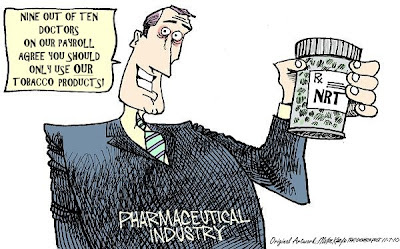
Remember when opposition started coming out against e-cigarettes and everyone assumed it was big, evil tobacco trying to eliminate the competition? Remember how shocked we all were that it wasn't Big Tobacco, but all of the health groups who we thought would now be happy that we didn't smoke anymore? Remember how interesting it was to find out that so many of those opposing health groups were in the pocket of Big Pharma?

Now think of this: Once it was obvious e-cigarettes were here to stay, either Big Pharma or Big Tobacco were bound to get into the e-cigarette industry. It was inevitable. Which would you trust more to handle that business now?

An industry which was called out 30 years ago for refusing to admit what everyone already knew anyhow - that smoking wasn't good for you and was potentially addicting; has made attempts to create safer products for its consumers; is under great public scrutiny and is sympathetic to people who want to use tobacco/nicotine products recreationally and without being vilified and ostracized by society?
Original Artwork: Mike Keefe, The Denver Post
Or an industry that has secretly been behind all of the lies about e-cigarettes and smokeless alternatives; lied to get smokers/vapers banned from just about everywhere; financially supported groups that made smokers, tobacco users and nicotine users social pariahs in order to guilt them into buying their gums and patches and increase their profits; lied about and/or hid the relative safety of smoke-free alternatives (effectively killing millions of smokers who would have otherwise switched); perpetuated the "quit or die" standard in order to sell more gums and patches and increase their profits; lied and/or hid the dangerous effects of Chantix; lied and/or hid the fact that NRT are highly ineffective, yet continue to tell people they are "safe and effective, so use them instead of smoke-free alternatives," which is effectively keeping smokers smoking (and endangering their health) every time the gums and patches fail?

You could say "neither," but then all you would be left with the e-cigarette industry, which is unorganized, unregulated, fly-by-night; has largely refused to step up and implement the most basic manufacturing and ethical sales standards in nearly 10 years; has been largely MIA in the fight against bans, taxes and sales restrictions and has only one representative organization that is apparently willing to throw everyone else under the bus to make their business model of the pre-filled, tobacco flavored carto the FDA standard.

It baffles me how vapers continue to see Big Tobacco as some inherently untrustworthy and unethical entity knowing what Big Pharma and the ANTZ groups have perpetrated over the past 30 years - lying and covering up the facts- at the expense of public health, in order to make a billions in profits. Especially since it was the ANTZ who have worked tirelessly to provide the "evidence" to demonize the tobacco industry in the eyes of the public (for doing exactly the same thing) and giving smokers a reason not to hold themselves accountable for their own actions.

Think about it - everything you know, all of the evidence about Big Tobacco, came from the same people who are now telling the public that "Big E-cigarettes" are targeting kids with the tasty flavors that no adult would use; contain anti-freeze, other toxic chemicals and carcinogens; are possibly more addicting than cigarettes; that vapers are just underhandedly trying to circumvent smoking bans and their vapor could be harmful to bystanders, so the industry is lobbying legislators to keep it legal to use publicly. They are twisting the facts, exaggerating, guessing and even telling outright lies to protect their profits. Doesn't that make you the least bit suspicious about what they've been telling you about Big Tobacco?


Opinions posted on this blog are those solely of the author(s) and do not represent the opinon, views or policy of any organization or company with which the author(s) may be otherwise associated.

Friday, April 20, 2012

American Legacy Foundation Called for Removal of E-Cigarettes from Market Without Disclosing its Financial Ties to Big Pharma


Dr. Michael Siegel
Boston University School of Public Health
The American Legacy Foundation released a policy statement on electronic cigarettes, in which it called for the removal of these products from the market. The statement was entitled "The FDA Should Take Electronic Cigarettes Off The Market Until It Is Satisfied That They Are Safe and Effective."


According to the statement: "While we remain open to promising products that can help smokers quit smoking, a consideration of all of the available evidence combined with important unanswered questions strongly supports our call on the FDA to prohibit the marketing and sale of e-cigarettes unless and until the FDA is satisfied that they are safe and effective."

I have already explained why this is an inappropriate policy suggestion that would result in severe public health harm. There is little doubt that these products are helping literally thousands of people to remain smoke-free and that removing them from the market would result in thousands of ex-smokers returning to cigarette smoking because e-cigarettes are no longer available. I have also explained how this policy statement misrepresents the scientific evidence, as it suggests that electronic cigarettes present a carcinogenic risk, although the actual laboratory findings show that only trace levels of carcinogens are present in these products, comparable to the levels of carcinogens present in nicotine gum and nicotine patches -- products which the American Legacy Foundation has no concerns regarding safety. Moreover, the levels of carcinogens in electronic cigarettes are more than 1000 times lower than in Marlboros, meaning that these products can dramatically reduce a smoker's cancer risk.


This commentary, however, focuses on another issue: the question of the objectivity of the policy statement and whether or not Legacy appropriate revealed conflicts of interest that may be perceived as affecting Legacy's position and its reporting of the scientific evidence.
[Read More]

Friday, March 2, 2012

Is drunk driving safer than smoke-free tobacco?


"There is no safe form of driving. Driving sober is not a safe alternative to driving drunk."

Imagine if that was the message being given to the public in an effort to reduce traffic fatalities. Imagine that the government required car manufacturers to place signs in their cars stating that "driving this vehicle while sober is not a safe alternative to driving while intoxicated." Imagine the public outrage that would occur if those tasked with protecting the public were to make that sort of statement or make such requirements! It would technically be the truth, but would anyone seriously view that as a responsible and effective message?

One sign tells the truth responsibly. 
The other - not so much.
There really is no safe way to drive - if you are talking about being 100% safe. Every time one gets behind the wheel of a car, or even rides in a car, there are all types of risks involved. The roads may be slippery, another driver may be texting, someone else may be drunk, an inattentive driver may run a red light - any number of things could happen. There is just no way to make driving 100% safe.

Fortunately, society has recognized that there are ways to reduce those risks and increase the odds that drivers will reach their destination safely. There are traffic lights, lane dividers, speed restrictions and laws against drunk or distracted driving to decrease the odds of an accident and seat belts, air bags and other devices to decrease the risks of death should an accident occur.

So, while we know that there is no 100% safe way to drive, we certainly wouldn't allow public officials to send the message that people may as well drive drunk - that would be irresponsible and counter-productive to the goal of reducing driving fatalities. It is clear to everyone that while driving sober still has some low risks, driving drunk is far more dangerous.

Yet, the government and public health officials routinely tell people that "there is no safe form of tobacco" and that "smoke-free tobacco products are not a safe alternative to smoking," even though research shows unequivocally that smoke-free tobacco use is far less risky. They also require tobacco companies to put warnings on their smoke-free products that they are "not a safe alternative to smoking," thereby discouraging smokers from switching. This is in spite of the fact that they know that smoke-free products do not have the risk of lung diseases, half to less than one-quarter the risk of oral cancers and the risks of heart and cardiovascular disease are proving to be slim to none with some smoke-free products. It should be made clear to everyone that while smoke-free tobacco still has some low risks, exposure to tobacco smoke is far more dangerous.

With 23% of US adults using tobacco products, approximately 13% of them being smoke-free only tobacco users, public officials and public health organizations are essentially telling these people that they may as well smoke or keep smoking. This is ethically no better than telling people that they may as well drive drunk because driving sober is no guarantee they won't have an accident. We would never dream of allowing our representatives to send that message about driving to the public and we shouldn't allow them to send a similar message about tobacco risks. 

According to MADD, efforts to educate the public - that not driving while drunk significantly decreased their risks of a fatal accident - have saved over 300,000 lives in the past 25 years. The CDC states that more deaths are caused each year by [smoking] than by all deaths from human immunodeficiency virus (HIV), illegal drug use, alcohol use, motor vehicle injuries, suicides, and murders combined. Imagine how many lives would have been saved over the past 25 years if people had known that there were much safer tobacco alternatives. The public should be outraged. 

The time is long overdue to stop sending the wrong message - even if it is technically "the truth."

Sunday, February 26, 2012

The sweet deal between Big Pharma and Big Tobacco

The 1999 article below was an obvious attempt at making "Big Tobacco" seem to be the bad guy pushing around "innocent" pharmaceutical companies, but it takes on new meaning when considering the recent actions taken against electronic cigarettes and other smoke-free alternatives by groups receiving massive amounts of funding from Big Pharma, such as the American Lung Association, the American Cancer Society and Campaign for Tobacco-free Kids. 
"The result is thousands of smokers cycling between competing forms of nicotine, "turning to a patch, gum or pill for a month" as a result of a New Year's resolution, "then relapsing to a cigarette product," said Gregory N. Connolly of the Massachusetts tobacco control program. "You get this sort of strange, symbiotic relationship between the tobacco industry and the drug companies where everybody makes money." 

Anyone "poo-pooing" the claims that Big Pharma would use it's financial influence over public health organizations to quietly lobby for policies, which ensure future profits, as "silly conspiracy theories" may change their mind after reading this must-read article. Apparently, the drug companies learned from the best.

Consider, too, the implications that the public health groups knew back in 1999 that the products they shill today as "safe and effective" already had studies which showed that "
on any single attempt people who try quitting cold turkey succeed about 3% of the time, whereas success with gum or patches rises to 7% or 8%." This translates to a 92% - 93% failure rate and a relapse back to smoking. It's interesting that this fact has only recently been widely reported in the media (based upon "new" studies) and as Big Pharma lobbies the FDA to market it's NRT products for long-term use to complete with the innovative smoke-free products    now gaining a market share of former smokers.

(Note: Once clicking the link below, the full article is 3 pages long.)

Big Tobacco Keeps Thumb on Makers of Stop-Smoking Aids

Memos show cigarette firms pressured manufacturers of nicotine gums and patches to mute their message.
February 14, 1999|MYRON LEVIN | TIMES STAFF WRITER
Cigarette makers and the drug firms that market nicotine gum and patches would seem to be natural enemies, at war in a multibillion-dollar market of people hooked on nicotine.

Yet a peaceful coexistence has reigned between them since nicotine replacement products were introduced in the 1980s to help smokers kick the habit.

The quit-smoking aids are widely advertised, and in recent years have joined such remedies as Advil, Tums and Robitussin on a list of the country's top-selling over-the-counter medicines. Yet they are promoted in a manner certain to minimize conflict with cigarette manufacturers.

Veterans of the smoking wars think they know why.

 For at least a decade, Philip Morris sought to intimidate drug firms marketing the stop-smoking products, using the threat of economic reprisals to make them tone down their ads and refrain from supporting the anti-smoking cause, according to once-secret documents from the world's biggest cigarette maker. Philip Morris officials declined interview requests.
 

 R.J. Reynolds, the second biggest U.S. tobacco company, also was engaged in some of the efforts, documents and interviews show.

 Pressure tactics were exerted against at least two major drug firms between 1982 and 1992, although they may have continued beyond that date. A non-confrontational marketing approach for the nicotine products remains in use today.

 Moreover, within the last three years, a major worldwide supplier of cigarette filters to the tobacco industry [GlaxoSmithKline] has become a power in the gum and patch business, thus playing in both arenas of the nicotine market.

 Drug firms say their ads are not intended to appease the tobacco industry, but rather aim for the best approach to boosting sales. Even so, their marketing message is the same one that cigarette makers sought to dictate in the past by threatening to cancel supply contracts with the drug firms' corporate parents, internal memos show.

 Rather than attack cigarettes directly or implore all smokers to quit, their ads target the narrow band of smokers who are currently trying to quit--offering a product that can help ease their nicotine cravings.

Companies Muffle Anti-Smoking Message

The involvement of drug firms in anti-smoking politics has been limited as well. Since gaining federal approval in 1996 for over-the-counter sales, patch and gum marketers have financially supported the American Cancer Society and American Lung Assn. in exchange for using their logos in ads. But to the disappointment of tobacco foes, they have chosen not to involve themselves directly in political fights--such as by lobbying for higher tobacco taxes that would help their business by making quitting more attractive.

Considering the history of tobacco industry pressure, "I think there's no question that there's still a residual influence," said Gregory N. Connolly, director of tobacco control for Massachusetts.


Drug firms seem determined "not to get into a public war" with cigarette makers, when "what the public needs is a war between the tobacco industry and the drug industry," Connolly said.

"There are a lot of people who hoped that when they [drug companies] got into the 'quit' market, they would be more aggressively involved in a lot of activities to reduce tobacco use," said Matt Myers, general counsel for the National Center for Tobacco-Free Kids.

S
ome observers have even suggested there is a symbiotic relationship between drug and tobacco firms as millions of would-be quitters cycle between buying cigarettes and gum or patches in a long-term struggle against nicotine addiction.
[Read More


Thursday, February 9, 2012

Smoking bans don't harm business?

This is a telling news report

The ANTZ claim that smoking bans are good for businesses and do not negatively impact the economy. You could just read this article and think that the owner allowing smoking in his bar is exaggerating the 20% loss in business after banning smoking. However, if business doesn't actually drop after smoking bans, why is the owner of the bar down the road - one that
does enforce the ban - feel it is "unfair" that the law is not evenly enforced? According to the ANTZ, his business should be booming compared to the smoke-filled tavern down the road. Except a picture is worth a 1,000 words:
Busy smoking bar
Nearly empty non-smoking bar down the road
Also telling is the comment made by the man at the smoking bar when asked if he's planning on quitting any time soon.

"When they bury me," he replied.

This is what we call an 'inveterate smoker" and smokers like him are completely forgotten and ignored by the ANTZ when they suggest tobacco and smoking policies to legislators. Rather than caring about this man, he is left behind as a lost cause or even worse, villainized for his smoking. This man, who has no intention of quitting tobacco, is fed the lies and half-truths about smokeless alternatives and electronic cigarettes. He is encouraged to keep smoking because the government tells him that smokeless alternatives are really no better for him. Even if he did decide to switch to a reduced-harm option to save money, local, state and federal governments all across the country are increasing taxes on these products, making them as or more expensive than cigarettes and removing that incentive.

 If he decided to switch to an e-cigarette, which are not currently banned for public use in Wisconsin (and in most of the country), the ANTZ groups such as the American Lung Association, the American Cancer Society and the Campaign for Tobacco-free Kids are lobbying hard to ensure that e-cigarette use is also banned in public, removing yet another incentive to switch. These laws are meant to protect imaginary "possible future smokers" who do not even exist, yet what they really accomplish is keeping real, living smokers in harm's way by putting up every road block possible to him switching to a very low-risk, smokeless alternative.

Wisconsin Assembly Bill No. 469 has been introduced by Senator Glen Grothman and is intended to ensure that e-cigarettes are not included in indoor smoking bans. If passed, this will be the first legislation it's kind passed in the entire world - legislation to protect the use of a harm reduction product in public. This legislation could set a precedence and set an example for state and local governments all over the country. (Update: The bill did not pass after two attempts. Some lawmakers I contacted said there was no need for it if cities and counties were not currently attempting to include e-cigarettes in smoking bans. Since then, at least two towns and one county have added e-cigarettes to their smoking bans.)

There are an estimated 2.5 million electronic cigarette users in this country. These are not the hypothetical youth and non-smokers over which the ANTZ wring their hands, but living, breathing human beings; former smokers who have made the conscious choice to end their exposure to smoke. These are folks who can head back out to that corner bar and enjoy an evening without having to step outside for a smoke and business could be booming again for that owner with the empty bar. The ANTZ want to put a stop to even that.

Please write your congressmen and ask them to support Wisconsin Assembly Bill 469. You can easily find them here: http://legis.wisconsin.gov/w3asp/waml/waml.aspx 

(For the record, I do not support public smoking bans in private businesses or open, outdoor areas. However, the ANTZ have successfully sold these bans to the public based on their "evidence." When it comes to e-cigarette use bans, on the other hand, they may as well cite fairy dust and magic potions as "evidence," because they have absolutely nothing else that even suggests harm to users or bystanders!)


Bookmark and Share
Bookmark and Share